Basics / 3 March 2026 / 6 min read
What is zero-point clamping?
A fixed, repeatable datum on the machine table, so a fixture or workpiece can be removed and put back in seconds without losing position.
Every machining job starts with the same question: where is the part? On a conventional table, the answer has to be found again each time a fixture is changed, by indicating, probing or tapping into position. Zero-point clamping removes that step by building the answer into the table.
How it works
A zero-point system has two halves. A clamping stud is fixed to the pallet, fixture or workpiece. A plate or module on the machine table holds a receiver that locates the stud and locks it. Because the receiver always locates the stud in the same way, the fixture returns to the same position every time it is clamped.
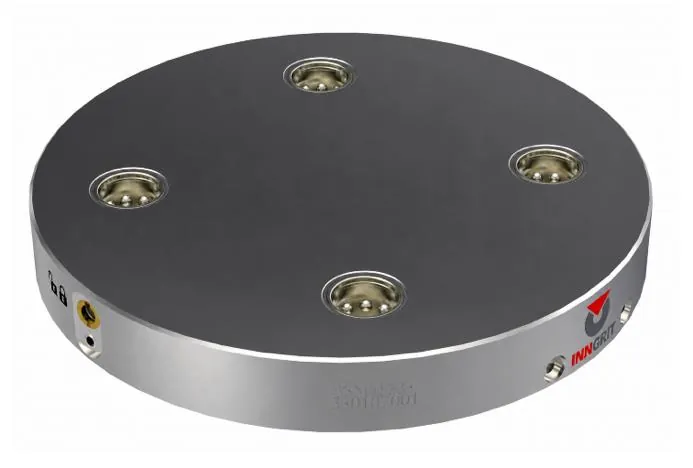
INNGRIT zero-point plates achieve a positioning accuracy below 0.005 mm. The plate is driven by air or oil, and every plate in the range is 27 mm thick, so it adds little height to the set-up.
What changes on the shop floor
- Faster changeovers. Swapping a fixture becomes a clamp and unclamp operation instead of a re-alignment job.
- One datum across machines. A fixture prepared on one machine, or off the machine, can be loaded on another using the same reference.
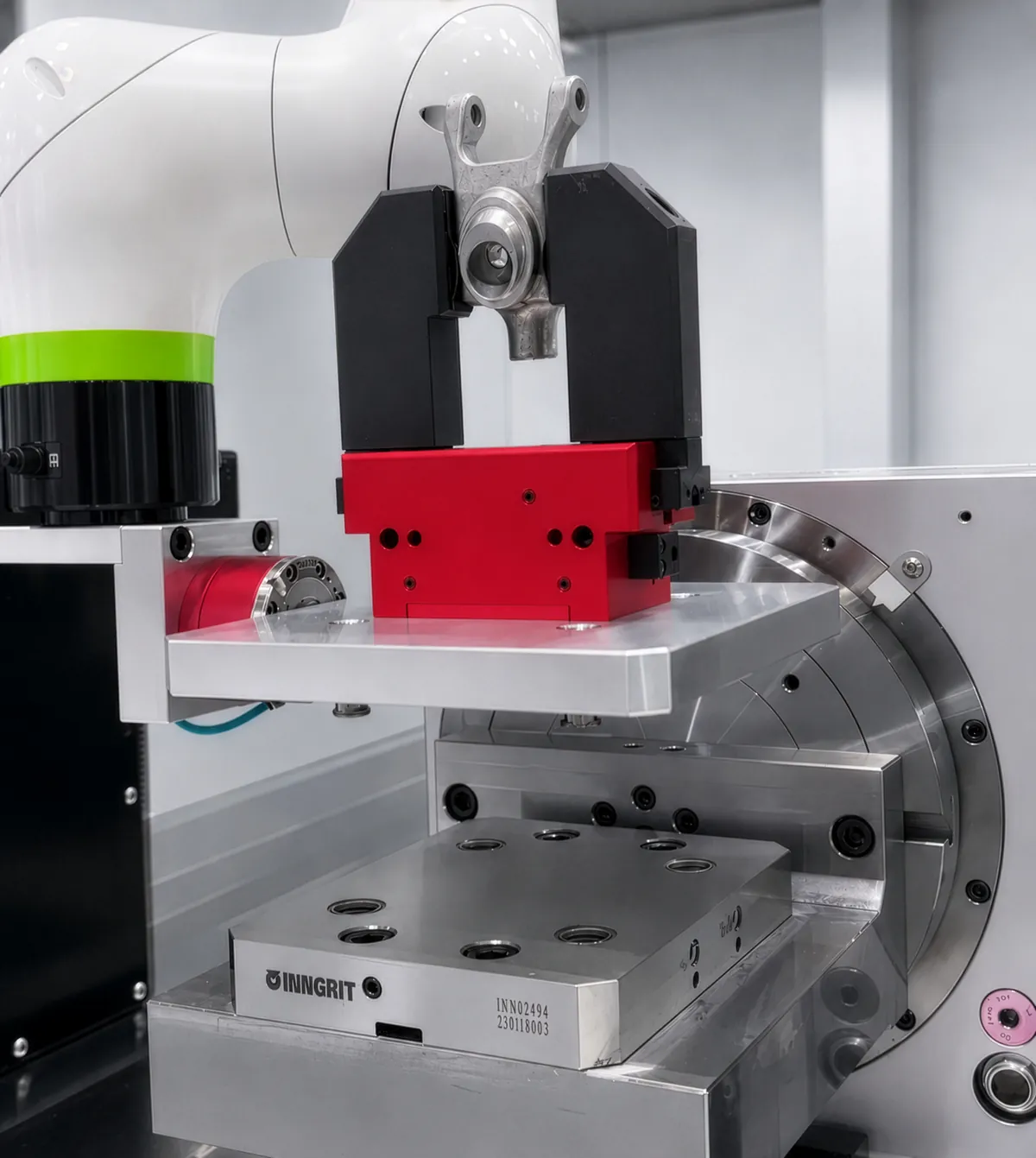
- Ready for automation. A fixed datum is what lets a robot load fixtures reliably. The patented AIR option blows debris clear automatically, which suits unmanned production.
The INNGRIT range
Zero-point workholding is not a single product. INNGRIT organises it in families so you can choose the one that matches how you manufacture.
| Family | Best suited to |
|---|---|
| Zero-Point Plates | Fixture plates for machine tables; Pitch 52 and Pitch 96, with optional AIR |
| Zero-Point Clamping Systems | Modules from Φ62 to Φ150, hydraulic or pneumatic, one to six stations |
| Robotic Automation Modules | Quick-exchange modules for robot arms |
| Accessories | Clamping studs, pallets, bushings, dust covers and valves |
Choosing a starting point
Most shops begin with plates. The next step is to decide on the pitch, which sets the stud size and the clamping force class. Pitch 52 vs Pitch 96 compares the two.