Maintenance / 2 April 2026 / 5 min read
Keeping plates clean: the AIR option and routine care
Chips and coolant are the main enemy of repeatable clamping. The patented AIR option clears them automatically. Routine care keeps it that way.
A zero-point plate relies on a clean seating surface. A chip or a film of dried coolant between the stud and the receiver can affect how a fixture seats. INNGRIT addresses this with the patented AIR option, and with simple habits at the machine.
What the AIR option does
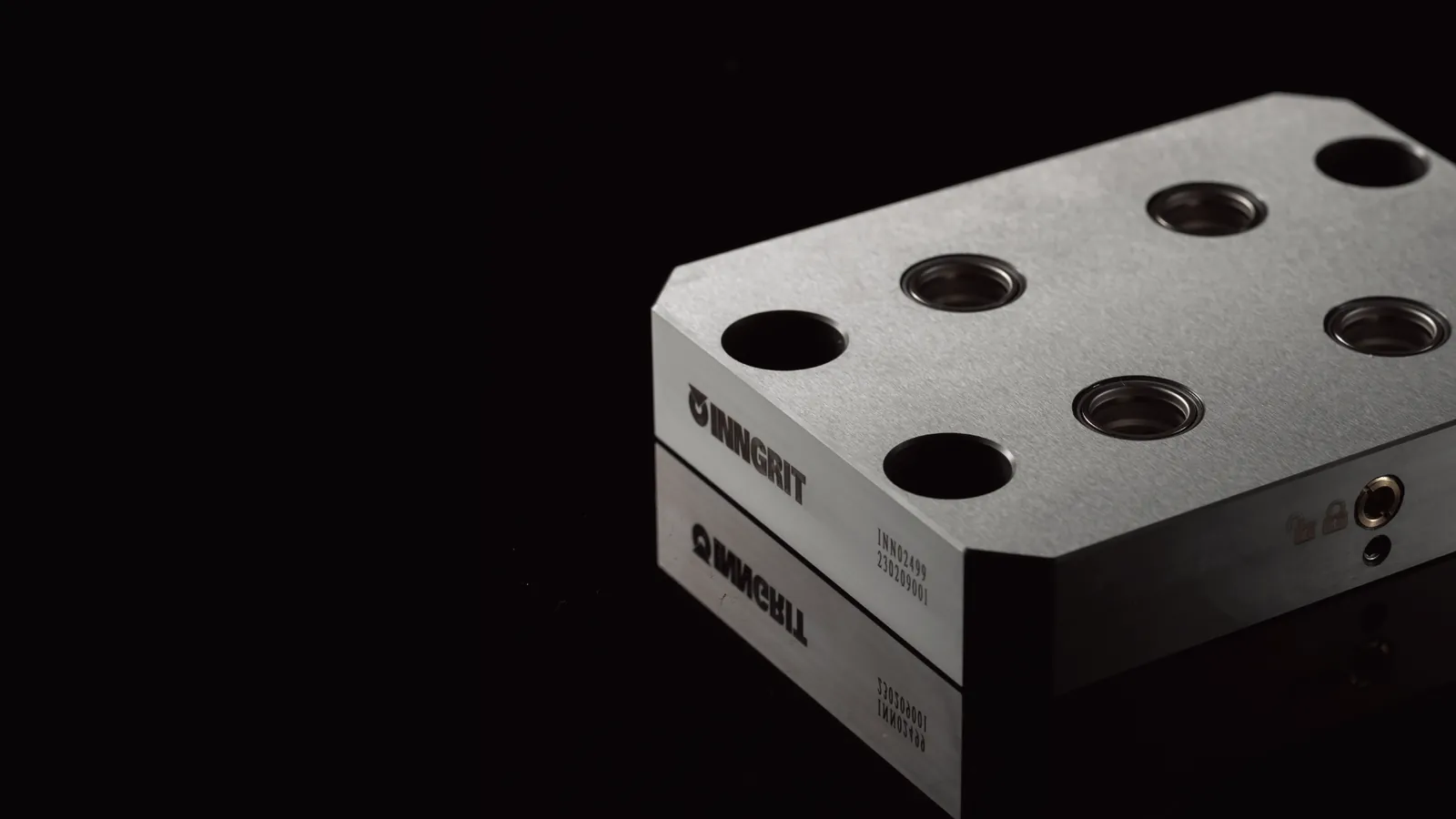
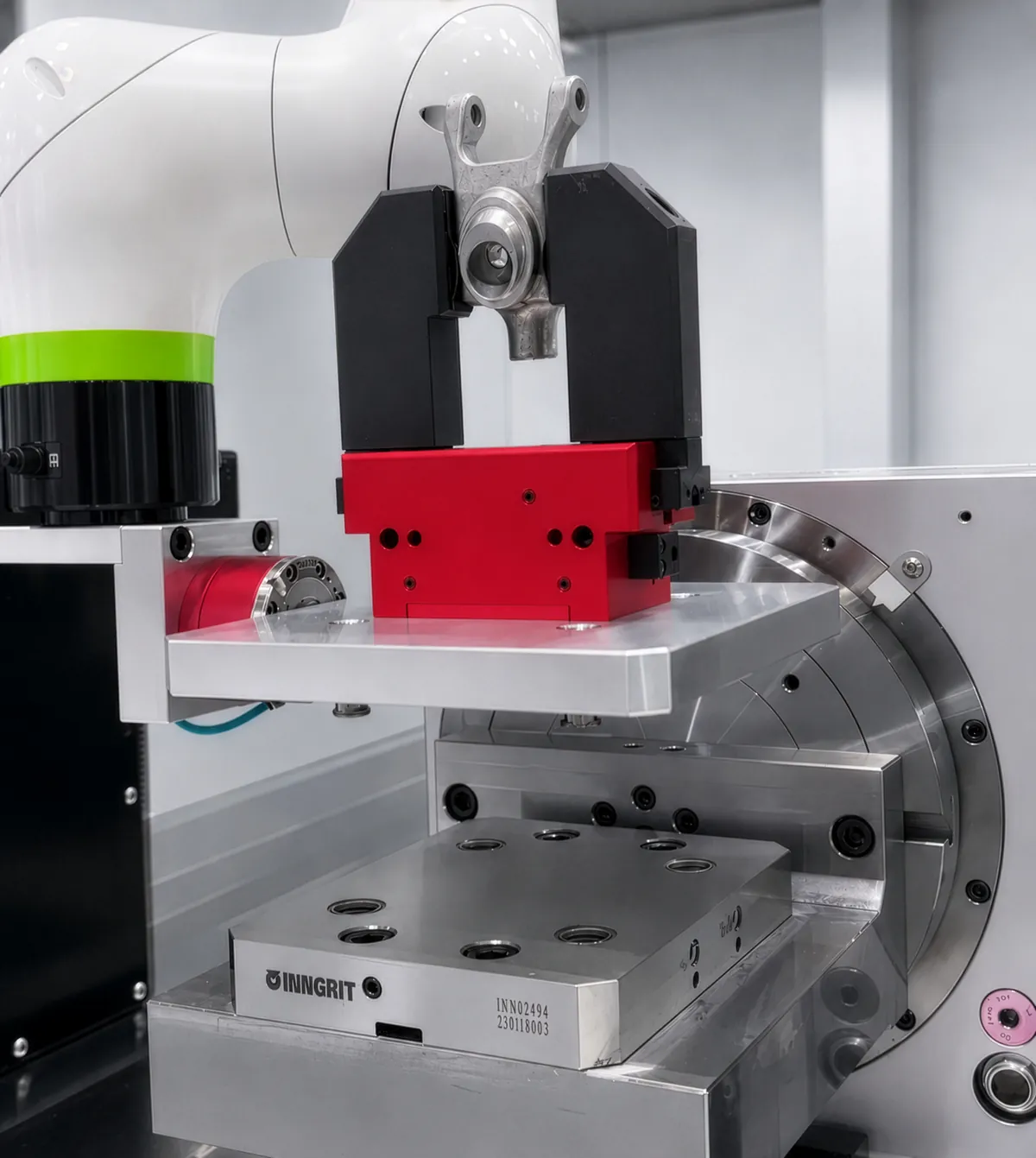
Plates with the AIR option include integrated air-blow cleaning. Air is directed to the locating surfaces to blow debris away automatically. That makes the option a good fit for unmanned and automated manufacturing, where nobody is at the machine to wipe the plate between jobs.
Standard and AIR versions are sold in pairs. For example, INN02479 is the standard Ø130 Pitch 52 round plate, and INN02519 is its AIR counterpart.
A simple care routine
The intervals below are a starting point. Adjust them to your coolant, material and shift pattern.
| Task | Suggested frequency |
|---|---|
| Blow off the plate and stud seats | Every fixture change |
| Wipe the locating surfaces and check for burrs | Weekly |
| Check studs for damage and confirm torque | Monthly |
| Fit screw dust covers on unused positions | Whenever a position is unused |
Protect unused positions
Screw dust covers are available in M8, M10, M12 and M16, and keep swarf out of unused positions. A quick exhaust valve (PT 1/8") is available as an option.
When to call us
If a fixture no longer seats cleanly after cleaning, or a stud shows visible wear, stop and contact INNGRIT. We would rather help early than have a fixture misplaced mid-cut.